
El Club Berta
It's four in the morning and we are on the highway, driving towards Prundu, a small village near Pitești. We're going to see the Pyramid. He points down and asks without looking at me:
- Does this qualify as a mystery?
- According to my standards or according to the literature? I'm not sure I'd recognise a mystery until it would start unravelling in front of me. Boltanski says mysteries are born from events, even seemingly unimportant ones, that "stand out in some way against a background or against the traces of a past event, not witnessed by the narrator, that remain perceptible later on" (Boltanski 2014). I'm the narrator, and I haven't witnessed anything yet. I don't know.
- What's the background?
- Just the "ordinary understandings as we know them through the intermediary of authorities (educational in particular) and/or through experience; the latter gives actions a relatively predictable character, especially by associating them with habits."
- So a mystery is a singularity.
- Every event is a singularity.
- Yes, but a mystery is "one whose character can be called abnormal, one that breaks with the way things present themselves under conditions that we take to be normal, so that our minds do not manage to fit the uncanny event into ordinary reality. A scratch on the seamless fabric of reality. (Boltanski 2014)"
- How poetic!
- "The result of an irruption of the world in the heart of reality. By the world, I mean 'everything that happens' – to borrow Wittgenstein's formulation – and even everything that might possibly happen – an 'everything' that cannot be fully known and mastered" (Boltanski 2014).
- I can't really explain why I am here with you. So I guess we got our glitch-mystery afterall. The question thus becomes: is this going to be a detective story?
- "Considering what a lousy job I do at poetry, I suppose it will be a high-camp short story, intentionally or unintentionally" (Shea and Wilson 1975). Detective stories "set forth mysteries and their solutions. The stories begin with an event and work back towards its causes" (Boltanski 2014). So we'd need to crack the case to make a good detective story. Do you think you can crack it? Besides, "an enigma can only stand out against the background of a stabilized reality" (Boltanski 2014). Now "I can fool you, but I can't fool the reader": our reality is by no means stable. Believe me, "I have seen the fnords"!
- Oh, look! You're quoting The Illuminatus! Trilogy: meta-conspiracies on the horizon.
.
16 hours before accepting my fate as a character in a camp mystery story, I received a call from a man I vaguely knew as a gallerist and art historian from Timișoara. His name was Toth. He is now driving the car. He needed my help with authenticating a work attributed to Ștefan Bertalan. It did not matter that I knew nothing about Bertalan: he only wanted me to help decipher the "mathematical nonsense" in the drawing. He believed the drawing was fake, but he needed a definitive proof. I quailed at the thought of having to get near the intersection of mathematics and contemporary Romanian art, and almost refused to help. No one could have judged me, anyway, given the recent incidents: an algebra postgraduate student fainted while reading a curatorial text at one of Galateca's art-and-science events, and an elderly researcher from the Institute of Mathematics started bleeding through his eyes, nose and ears while visiting the Young Blood 5.0. Hello, Math! exhibition at Art Safari (Coman 2025). Sure, the mathematician had hematohidrosis, but he couldn't bleed on demand – now that would have been a great asset for his potential acting career. He claimed such bleeding crises were extremely rare, having been triggered only twice in the past thirty years, in moments of great distress and anger. In any case, I did not wish to experience distress and anger. But then Toth mentioned the odd connection between the drawing and its owner's New Age beliefs: pyramids. I love pyramids.
.
- So are we going to unveil a conspiracy? A pyramid-power conspiracy? Aren't we already way too deep inside the story to be able to perceive it as such? I thought conspiracies can be distinguished from ordinary human relations only from the outside.
- They can be distinguished from ordinary relations "by the operation of unveiling that sets an apparent but fictitious reality and a hidden but real reality side by side, on the same level" (Boltanski 2014). We're safe. I can see the fnords, so I guess that puts us on the fringe. We just need "a coup de théâtre, a dramatic turn of events" to unmask the conspiracy. We need to show how reality "as initially perceived by a naive observer (and reader), with its order, its hierarchies and its principles of causality, reverses itself and unveils its fictional nature, revealing another much more real reality that it had been concealing".
- So you want us to build an entire second reality "inhabited by things, acts, actors, levels, connections and especially powers whose existence, indeed, whose very possibility, had not been suspected by anyone" (Boltanski 2014). I think this might be a bit too much to ask from a high-camp short story.
- I'm sure you'll figure it out. But "first, let us assist at the erection of the pyramid"! It all goes back to Hegel.
- Of course it does.
- Through Derrida.
- Dear god.
- You prefer God to Derrida, I see.
- How can you read Derrida?
- How can you not? Have you ever listened to any of his lectures?
- No. Too much cows.
- You should. I've got one on my phone. I can play it for you, if you want. Anyway, in it, he says that praying is "not like ordering a burger". I love that. I love the little image of Derrida spending an evening praying and ordering a burger to prove they're not the same thing. Not that he would have done. I mean, I can't see him praying, or trying to prove something by experiment. I bet he ordered burgers, though.
- Pizza.
- I'm sorry?
- It was pizza, not burgers.
- I thought you hadn't listened to his lectures.
- I haven't. I just read them. Or read about them in crime novels (Thomas 2006).
- Oh, so you know all about his take on Hegelian semiology and the pyramid: "the sign—the monument-of-Life-in-death, the monument-of-death-in-life, the sepulcher of a soul or of an embalmed proper body, the height conserving in its depths the hegemony of the soul, resisting time, the hard text of stones covered with inscription" (Derrida 1972).
- I know Hegel used the pyramid – an external monument, a tomb – to designate the sign. He considered it "the semaphor of the sign, the signifier of signification".
- Right. Because the sign is the "immediate intuition, representing a totally different import from what naturally belongs to it; it is the pyramid into which a foreign soul has been conveyed (transposed, transplanted...), and where it is conserved (aufbewahrt: consigned, stored, put in storage)" (Derrida 1972). As Sloterdijk observed, "the familiar schema soma/sema returns: the body, in keeping with the eternal refrain of Platonism, is the monument of the soul. If signs are monuments in which immortalized living souls reside, however, then one can see the pharaonic grave – the pyramid – as the sign of all signs. ... Semiology would then, in a certain sense, only be possible as a general science of pyramids – every encyclopedia would contain nothing but the avenues of vocal pyramids together with the written signs in which the ever-living signifieds are preserved, bearing witness to the hegemony of the buried breath over its shell with every single entry (Sloterdijk 2009)."
.
And there were pyramids, and there were signs, and there were signs inside pyramids, and pyramids inside signs. I knew that the New Age myth of the Pyramid Power was quite popular in the 80s and 90s, especially after Liekens' book was translated (Liekens 1977), but I was convinced that pyramidology belonged to the chaotic transitional past. I was wrong. According to the books that coined the term, Pyramid Power (Flanagan 1975) and Pyramid Power (Toth and Nielson 1976), the pyramids of ancient Egypt and other similarly shaped objects harbor special powers: they help preserve food, maintain the sharpness of razor blades, purify water, make plants grow faster and stronger, improve health, "trigger sexual urges", and function "as a thought-form incubator". All this magnalia thanks to the energy accumulated in pyramidal structures. And as I was about to find out, energy was still accumulating in Romanian pyramids. I reluctantly accepted to see the Bertalan drawing and promised I would try to make sense of the mathematical signs scribbled inside the pyramid. The drawing belonged to an art collector who worked at the National Library in a high-ranking position, so Toth arranged to meet there. As soon as we entered the building, we were welcomed by a golden, carbon tube pyramid, standing three meters tall in the foyer. That was not a good sign. To our surprise, the pyramid was not art. It was a medical device, it was for sale, and it had a price tag: "PlasmaThor Ascension Chamber. Special price this weekend only: 5000 euros". I was perhaps a bit too interested in the device. A young lady quickly noticed my perplexity and gave me a leaflet: "The PlasmaThor Ascension Chamber Pyramid is built using geometric proportions carefully computed to create a harmonic structure, both visually and energetically. Its vibrational technology is based on the Tesla Principles, Rife Frequencies, Sacred Geometry and Cosmic Harmonies. Integrated at the top of the pyramid there is a calibrated cosmic antenna, connected to a special system called Cosmic Signal Generator. This generator transmits harmonic frequencies inspired from the natural rhythms of the Universe and contributes to the creation of a balanced vibrational field inside the pyramid. It is a complex system conceived for profound relaxation, energetic harmonisation and the exploration of the relation between vibration, frequency, and human well-being. In nature, everything functions through vibration: the human body, water, plants, light, Earth's magnetic field, and even the space around us. Each organism and every structure emits specific frequencies, like energetic notes in a continuous interaction".
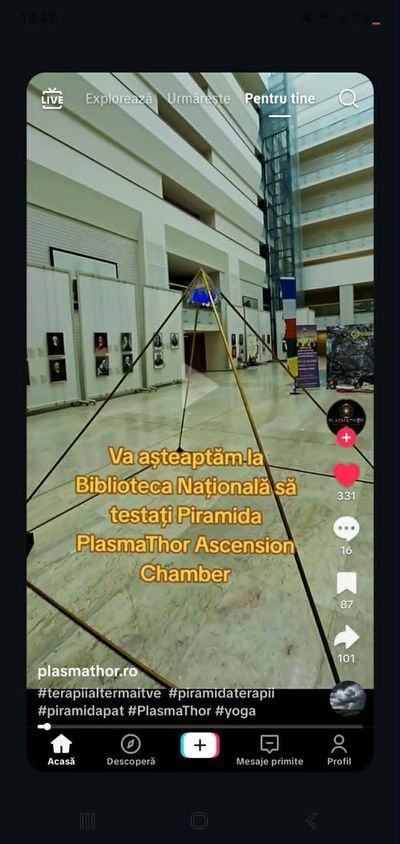
As I was finishing reading the pseudoscience hallucination, and hence losing faith in the healing power of public libraries, the art collector greeted us. He invited us to his office and presented the work. The drawing was unimpressive. A big, messy India ink sketch of a pyramid, a faded watercolour wash, and some wiggly text. It was signed and dated: 1975. It looked plausible to me. We took some pictures, assured the rich pyramid zealot that we will send the result of our appraisal soon, and we left in a hurry. Before I got the chance to ask what we are going to do next, Toth began a rant against "the pyramid cult". He was sure it was all just a scam, that the art collector was trying to trick us into believing the drawing was an original, and that he planned to use it to promote his phoney scienceploitation business. He insisted that we could only fight the pyramidologists from within their cult, and that we should visit a specialist in pyramid power to get advice on the meaning of the drawing.
.
- It's clear now why Derrida had to develop a "passionate interest in the Egyptian pyramid, for it constitutes the archetype of the cumbersome objects that cannot be taken along by the spirit on its return to itself" (Sloterdijk 2009).
- As the Egyptian himself said: "that the path still remains circular, and that the pyramid becomes once again the pit that it always will have been" (Derrida 1972).
- But how did he even know this? What is his statement that there is a way from the pit to the pyramid and back again based on? He "implies that there is a single possibility of deconstructing the otherwise undeconstructible pyramid: by transporting it back along the entire route it has taken on the trail of textuality, from Cairo to Berlin via Jerusalem, Athens, Rome, and finally Pitești (Sloterdijk 2009)."
- Indeed, "one only has to dis-distort it long enough until it changes back into the pyramid that it initially was: this pit expresses the fact that human life as such is always survival from the start. It fundamentally possesses the form of self-recollection. Existing in the moment means having survived oneself up to that point. At every moment in which it reflects upon itself, life stands at its own sepulchre, remembering itself – while the voices of its own been-ness sound from the depths" (Sloterdijk 2009).
- One can easily imagine him visiting Prundu and reciting Baudelaire's line 'mon semblable, mon frère' at the ruined monument of Khufu's second-hand pyramid.
- I can only imagine the scene in Egypt. It has to be the real pyramid! "Egyptian is the term for all constructs that can be subjected to deconstruction – except for the pyramid, that most Egyptian of edifices. It stands in its place, unshakeable for all time, because its form is nothing other than the undeconstructible remainder of a construction that, following the plan of its architect, is built to look as it would after its own collapse" (Sloterdijk 2009).
- Oh, look! That's our pyramid there, behind those trees. It's tiny and ugly and– gone. Can't see it anymore.
- That was unexpected. Couldn't get a proper look. Smaller than I imagined, not grand for sure. Pintilie my ass!
.
The pyramid-power specialist that we visited was in fact an artist and friend of Toth, not an expert in pseudoscience at all. But she did study how the phenomenon evolved across decades, for an exhibition that she had curated some years before (Cândea 2024). That was as close as we could get to the "cult". The exhibition was called On The Fringe and "explored the limits of and liminal spaces between science, pseudoscience, myth and art, provoking the reconsideration not just of all things known, but of the methods by which these got to be known as well, inviting us to value ambiguity as a source of inspiration and learning, and to appreciate the diversity of perspectives". Or, how she summarized the experience, she got to read a lot of kooky testimonies from people who claimed to have witnessed the supernatural powers of pyramids – especially those of the pyramid in Prundu, Pitești. Her effort was endearing: she was searching for "a cultural consensus which could explain why people believe in the pyramid power, a collective attraction to fantastic explanations and magical thinking, observing how uncertain information integrates into community narratives". The study was inconclusive. Still, her fascination with the myth remained intact, years later. She told us the story of the Pitești Pyramid. The glass structure was built in the '80s, as a 1:10 replica to Khufu's tomb, to accommodate the scientific study of pyramid power, at the initiative of the Ministry of Agriculture and the National Council for Science and Technology, under the communist regime of Nicolae Ceaușescu. The pyramid functioned as a National Laboratory for Fundamental Research between 1985 and 1992: several researchers, guided by Mărioara Godeanu, professor of biology and researcher in the field of wastewater treatment (Godeanu et al. 1987), conducted experiments on water purification and germination of plant seeds. The experiments were inspired by the work of Toth and Nielsen (1976), who claimed that "the seeds which were stored in replicas of the Egyptian pyramids germinated quicker and grew taller". The experiments were secret, and therefore, no research results were ever made public. The artist concluded: the secrecy of the project fueled the collective imagination from which a wild assortment of pyramid speculative fiction was born. People living in the vicinity of the pyramid began to report unusual findings – their plants grew faster, their water tasted better, their thoughts expanded, their loins–. The pyramid is now abandoned, gated, on the premises of a water treatment plant, and cannot be visited. The artist herself tried several times to obtain a special visit permit, but her requests were denied: "You can only see it from the ring road, on the left side, two kilometers before you reach EuroMall Pitești, on your way from Bucharest. You can basically recreate Pintilie's train scene from The Afternoon of a Torturer, in which the pyramid wooshes by the window, if that's your kink". She casually told us that while trying to find a way to visit the pyramid in Prundu, she discovered that there used to be another pyramid, much closer, in Bucharest. It had been built roughly at the same time, according to the same plans, and for the same purpose. However, she had no idea where precisely the pyramid was, or if it still existed.
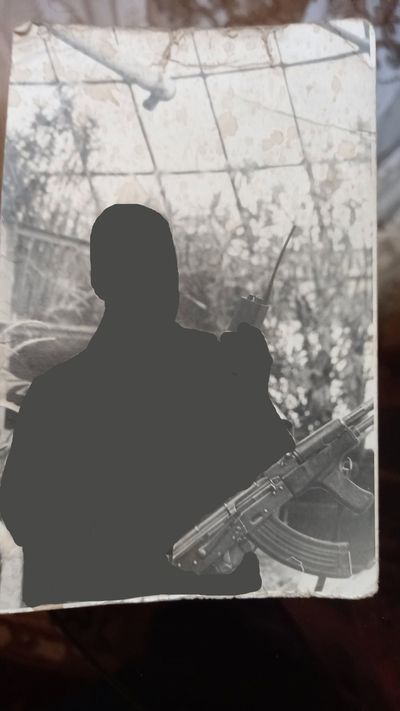
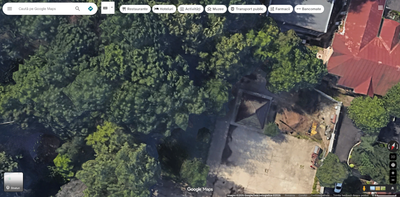
The moment we left her studio, we started searching the web for the second, mysterious pyramid. Half an hour and dozens of tabs with dodgy websites and forums later, there it was: a picture taken inside a glass pyramid, posted on a forum for retired army officers. The pyramid was built at the Military Unit 02210, Orizont, and its energy served as wastewater treatment. In the beginning, it was used essentially as a mini sewage treatment plant for a pig farm. After the wastewater produced by approximately 200 pigs was purified with pyramid power, it was used to grow the plants housed inside the pyramid. The plants were in turn food for the pigs. Later on, when the pig farm closed, the pyramid became a greenhouse / mindfulness space for melancholic soldiers: hundreds of plants, a fish tank, and a ladder climbing up to the energetic centre of the structure. The project for the repurposing of the pyramid was signed by the same tireless researcher, Mărioara Godeanu, then director of the Institute of Applied Ecology. I could only find a short description of the project in the records available online. Godeanu noted: "The pyramid power acts on water molecules. The plants in the pyramid act like a pump. They feed on phosphorus, nitrogen and other harmful substances. Moreover, a pyramid becomes active when the height is equal to the result of dividing the side length by the golden number, i.e. 1.618033. In addition, one of the sides must be placed parallel to the north-south direction of the magnetic poles. It has been demonstrated that, at the intersection of the medians of such a pyramid, the energies have maximum intensity. This is where the Chamber of the Kings was located in the Egyptian pyramids". There was no way they would have let us visit the pyramid inside a military unit, so I did the only reasonable thing I could think of: I opened the maps app and analysed satellite images of the unit.
.
- Oh, don’t cry. Perhaps we'll see another one. After all, earlier today we found a pyramid inside a military unit! I wouldn't be surprised if there were more, waiting to be discovered.
- You're right. Have you seen The Diary of a Pyramaid, that porn they shot in the Hanging Pyramid of Galați?
- There is a Hanging Pyramid Garden in Galați?!
- A crystal garden, to be precise. Perhaps we won't visit that one. But the government, through the Ministry of Health, is building a pyramid as part of a 60 million euro project for the refurbishment and expansion of the Techirghiol balneological and recovery sanatorium.
- Is this a joke?
- The official project description listed the pyramid as one of the outcomes of the investment; they want patients to benefit from the pyramid power during the spa treatments at the complex.
- I always loved Techirghiol and its little devils walking around covered in pitch-black sapropelic mud. I can only admire their courage to use New Age pseudoscience for justifying public investment in a Lake of Fire. Are they building a new spa in the shape of a pyramid?
- No, they are only building a pyramid structure that will cover the salty water pools near the lake.
- What about the normal pool?
- That one too.
- Blimey. Do you think the government is involved in this PlasmaThor business?
- No, I like to keep my Occam's razor sharp: they must be a separate breed.
.
Addendum on the not so sharp blades. As soon as I first saw the drawing in the art collector's office, I noticed some numbers cramped up in a corner. They appeared to be polar coordinates, so I pretended to take some notes and quickly transformed them into WGS84 coordinates with an in-browser convertor before entering them in the maps app on my phone. By the time we left the library, I already knew that whatever we were looking for was in the middle of an open field, near Timișoara. I was invested: the story of the pyramid-power club seemed incomplete. There had to be more. Was this a post-ironic art stunt? Was this a context hack? Was I playing a part in it simply by accident? Or was it just a lousy forgery attempt by the owner of a pseudoscience scam business? Toth claimed to have access to Bertalan's archives, including his notebooks and journals. I was sure they held the key to the mystery, and that Toth knew more than he had told me. I was not convinced that the drawing was fake, but I also found it hard to believe that the pyramid myth had already entered Bertalan's art practice by 1975. The Pyramid Power books had just been published: the timelines did not align. However, the location of the pyramid in Prundu, the location of the Orizont military unit, and the location hidden in the drawing did. This couldn't have been a coincidence. I needed an answer, so I spent several hours coming up with a compelling explanation of why we must go to Timișoara and look through the archives, without revealing the location I had found written in the drawing. I concocted a mathematical fiction stew using the heights of the pyramids, the intersection of the medians, the distance between Pitești and Timișoara, and the golden number: the proof was geometrical and rather elegant, albeit complete bonkers, hiding all the numerological non-sense. I was ashamed and scared of myself. Whether Toth really believed me or he was just amused by my effort to impress him, it does not matter anymore. He was enthralled by my 'discovery' and we left in the dead of the night to Timișoara. First stop, Prundu.
.
- What about Bertalan? Do you think it's possible that he actually believed in the supernatural powers of pyramids? Was he part of a pyramid-power cult?
- I strongly doubt that.
- He did draw many pyramids. He also made lots of pyramid models.
- He made drawings and models of several geometrical solids. He was interested in geometry.
- I read on Wikipedia that there is a religion which was founded around the pyramid-power myth in 1975. They even built a pyramid in Salt Lake City in '79. The religion is called Summum.
- Oh-kay.
- Do you know what the Sigma symbol stands for?
- Sums? Alright, I see what you mean, but we already know the origin of the group's name. Sigma was just a sum of units. And the units were the former members of the 111 art group (Blistène 2026).
- Sigma participated in an exhibition called Art and Energy at Galeria Nouă in Bucharest, 1974.
- Energy was a trendy topic. The 70's equivalent of liminal spaces.
- The works they presented were interesting, but I'm more excited about the ones they didn't get to exhibit.
- I'm afraid I don't know much about that.
- It seems that not all the works they sent to Bucharest were exhibited. Two were lost on the way. We should check Bertalan's journal; perhaps he made a note.
- I doubt there's anything relevant in the journal. Perhaps the works were damaged during transport. Like the model of their Informational Tower, which was sadly destroyed.
- The one inspired by Nicolas Schöffer's Tour Lumière Cybernétique? It says on Wikipedia that all that was left of the model was its pyramidal base. What a coincidence! Don't you think that their idea of mixing architecture, sculpture, light and energy could fit the pyramidology agenda? Instead of a tower, just build a pyramid!
- I guess, but then everything was like that in those years – most art from that period could be put in the almost-new weird box.
- What if he was just interested in the effect that the pyramids could have on the life of plants? He did study plants a lot. And he really loved them. Remember the great '79 Helianthus annuus cohabitation?
- The what?
- The sunflower project! I've lived with a sunflower for 130 days? He was clearly curious about the plants' growing process. And their sensitivity and communication capacities. He helped our greatly esteemed professor Mărioara Godeanu make two films on plant sensitivity.
- He did?
- The films were directed by Mircea Popescu in the early '80s, but Godeanu was the mastermind behind them: Beyond the Silence of Plants and Plant Sensitivity (Popescu 1981, 1982). Bertalan is credited as an image consultant. He cited as inspiration for the films The Power of Movement in Plants (1880), in which Charles Darwin demonstrated and described in great detail the idea that plants are sentient and can initiate movement, prefiguring subsequent research on plant intelligence, and La croissance des vegetaux (The Growth of Plants, 1929), in which Jean Comandon used time-lapse photography to accelerate the slow movements of plants.
- Classics. Great works.
- He also mentioned Raoul Heinrich France's Germs of Mind in Plants (1905) and highlighted an idea that guided his work: "The plant possesses everything that distinguishes a living creature – movement, sensation, the most violent reaction against abuse, the most ardent gratitude for favours – if we will but take sufficient time to wait, with loving patience for its sweet and gentle answers to our stormy questions".
- How intriguing. I didn't know they already knew this about plants. But there’s no point in questioning the exactness of science in the early 1900s.
- How about Tompkins and Bird's science of the ‘70s? The last book in Bertalan's moodboard is The Secret Life of Plants, which, according to Wikipedia, "documents controversial experiments that claim to reveal unusual phenomena associated with plants, such as plant sentience and the ability of plants to communicate with other creatures, including humans".
- I think I saw a documentary with the same title. Groovy soundtrack by Stevie Wonder. You're starting to annoy me with your Wikipedia-citing habit. Put your phone down. Look, I understand you'd like this to be a story about a pyramid-power conspiracy. But I don't think we can shape it that way. You know how "certain gardens are described as retreats, when they are really attacks" (Cluitmans 2021)? Well, I admit Bertalan did some guerrilla gardening. Indeed, his garden, and by that I mean his art practice which revolved around plants, was more of an attack than a retreat: he was questioning preconceptions, habits, hegemonies. But I don't think he wished to "immanentize the botanical eschaton" by designing magical pyramids.
I kept quiet the rest of the journey to Timișoara, sulking. I could not understand Toth's role in the plot.
.
Toth left me alone in his university office while he met a man who agreed to lend him Bertalan's notebooks. To my surprise, he was only gone for ten minutes. We started to read the journals, searching for clues. There was no entry during the period in which the Art and Energy exhibition took place. We only found a few pyramid sketches, and some plant drawings and botanical memos, none of particular interest. Toth noticed jokingly that Bertalan seemed to care more about the passing of time and a plant's lifespan than about the plant itself. It all clicked then: what he cared about most was time. Almost all the journal entries referred to chronology, timelines, time perception, time compression, and time gaps. Most of the text didn't make much sense, but his obsession with time and time measuring through unconventional methods was apparent. We went back to the oldest notebook, and paid attention to the moment he began writing about time. May 1972, shortly after the mathematician and Sigma collaborator Lucian Codreanu gave him some notes by Anatolii Fomenko, the renowned Soviet Russian mathematician who wrote the New Chronology, a radical revision of history. We knew nothing more about Fomenko, so we went to the library in search of details. We could only find a book by Joseph Kellner, The Spirit of Socialism: Culture and Belief at the Soviet Collapse, which included a small chapter discussing his ideas on chronology: "Anatolii Fomenko began his historical work in the early 1970s, spurred by an apparent aberration in the motion of the moon" (Kellner 2025). His central contention, "which he and fellow mathematicians began elaborating in the 1970s, was that all we know of history transpired only in the last thousand years" (Kellner 2025). One of his arguments "was that the edifice of traditional chronology rests on surprisingly weak pillars and is maintained largely by custom and faith. Specifically, he claimed that the timeline of current-day chronology was established in the sixteenth century, using methods that were critically limited by underdeveloped early modern mathematics" (Kellner 2025). So he took upon himself the task of finding the true chronology: "The underlying logic was that, if historical knowledge, as transmitted in texts, deteriorates at a steady rate over time and additionally if all historical information preserved in texts derives exclusively from earlier textual sources, then the method could identify not only which texts derive from others but also how much time elapsed between their respective writings, within a margin of error. Because knowledge decays at a steady rate according to Fomenko, one can expect that texts further removed in time from the original will preserve less detail, and because texts derive from a fixed set of earlier texts, one can expect two texts describing the same history to dedicate the same proportion of ink on the page to the same people or events" (Kellner 2025). In the end, "Fomenko found four isomorphisms in all and shifted the older three into the future. Much of (conventional) preclassical history is advanced by 1,526 years, classical antiquity advances 1,053 years, and the early medieval period advances 333 so that all three units merge into the (conventional) tenth to seventeenth centuries. From this basis, and in distinctly dispassionate prose, he reconstructed history with no room for a Mongol invasion" (Kellner 2025). The chapter ended with the obvious conclusion that Fomenko's findings were mumbo-jumbo. Truth be told, we didn't really care about the Mongol invasion either. What startled me was one of Fomenko's drawings. I immediately recognized it from Bertalan's journal. Back in Toth's office, the pyramid was waiting for us: the reproduction of the figure from Anatolii Fomenko’s, “Nekotorye statisticheskie zakonomernosti raspredeleniia plotnosti informatsii v tekstakh so shkaloi,” Semiotika i informatika, no. 15, concerning the rate at which historical information is lost – which Fomenko presumed to be constant over time.
-C8lOZkAZGufJ6ZOi0WVPO4EO8oJuAf-400x545-2dhSJu3y9sWbcdDb7hE0cJGmxWSh9E.png)
Why was Fomenko's drawing relevant to Bertalan? What did the New Chronology trigger in his art practice? We spent the rest of the day reading through his notebooks trying to understand why he became obsessed with time in connection to the ontology of plants. It seemed that through the years, his focus slowly shifted from time, timelines and plant chronology towards the non-history of plants. One of his earliest passages about non-history read: "non-history is freedom, in the sense of indeterminancy, a diffuse background where everything is alive within possibility, and anything can happen that is not covered by the dominant, positive concept. ‘Anything can happen?’ you will ask. But doesn't everything happen only within history? What is that – a happening without history? Philosophically, Hegel allocated strange happenings without history to the domain of nature. Not yet suffused by the spirit (Geist)'s reflective relation to itself, astronomical and geological events, the existence of elemental realities (such as water, air, fire, and earth) and of plants and animals did not amount to history from the dialectical perspective. (...) The dialectical history of plants, which are otherwise deemed to exist outside of history, mixes together (theoretically and practically) their productive destruction within the framework of exploitative use and their poisoning by the rapidly snowballing planetary toxicity. (...) To reduce the non-history of plants to the obverse of hegemonic history is to impoverish it unapologetically". I had never heard of the non-history of plants before, so I duckduckgoed some keywords that kept repeating through his texts. To my surprise, I found the passage, as well as several others listed below, in an essay by Michael Marde: "The Labyrinths of Non-History: Of Plants and Not Only" (Morette and Aresheva 2025). What was unusual was the year the essay had been written: 2024. How could Bertalan have quoted an essay that was written 50 years later? Were Bertalan and Marde quoting another text?
We tried to understand Bertalan's use of the concept of botanical non-history. Did he ascribe a fixed meaning to it, or was he just trying to imagine where one of Fomenko's deleted pieces of history could fit? In his notebooks, he wrote about plants as vegetal possibilities and defined their non-history as an account of such possibilities: "Arguably, history is always an account of the actual, of the actualities that are no longer actual, but that at one point were. There is no history of the possible, or, if there is, it reduces possibility to an incomplete or, worse, a failed actuality. Plants are most certainly actual, but they live in and as possibilities thanks to their capacity to shed virtually all organs depending on the seasons and the circumstances, or to their meristems, which maintain embryonic, stem-cell-like potential through their lifetimes, or, again, the sensitive root tips, whose cells regenerate upon being lost or cut" (Morette and Aresheva 2025). But he also defined it as a non-story: "it doesn't have any of the recognizable elements of a plot, neither dominant narrative lines nor clearly demarcated characters, given that the dividing lines between plants and their milieu, or plants and representatives of other biological kingdoms, are blurry. An anthropocentric bias (of which I, too, stand guilty at times) is to tie meaning to a story, as if, without narrativizing and storying, a life has no meaning" (Morette and Aresheva 2025). At the same time, he saw the non-history of plants as fiction: "Plants invent and reinvent themselves, molding their environments, and inviting others to share the ecosystems they enliven. Instead of world history, we may contemplate the world invention by plants, which means that besides the vegetally invented worlds to come. (...) Non-history covers the entire realm of fiction, virtuality, and invention, some of which passes into actuality, while other of its elements are suspended in past, present, and future possibilities. Thus, non-history deals with the time horizon, against which time of history appears (and disappears). And plants guide non-history's unfolding and its folding into itself by means of world invention, which is also their ongoing self-reinvention" (Morette and Aresheva 2025). Surprisingly, he later even came to reject the tracking of the evolution of plant species, and the production of a scientific history of plants: "transcribed into words or into mathematical-statistical notation, this is a betrayal of their existence. Betrayal ought to be read in terms of the double entendre it implies: an expressive manifestation and breaking of the trust of the one betrayed. Something of a plant's being is divulged in this history and, by the same token, it is undermined, lost sight of. The non-histories of plants are often wordless (as wordless as the plants themselves), but they do not, as a result, amount to nothing. They resonate in the experiences of being with plants, as much as in art and its articulations" (Morette and Aresheva 2025).
- I don't know what to make of all this.
- I think he wanted to build a plant-powered time machine.
- Doubt it.
- The drawing that you believed was a forgery, was in fact his. It was the plan for a pyramid he built.
- Nonsense.
- I have the exact coordinates of the pyramid: they were encoded in the drawing. I had them all along, I just didn't know what they were pointing to. The crazy part is that the pyramid aligns perfectly with the ones in Pitești and Bucharest.
- Please don't tell me you believe in ley lines!
- Of course I don't think ley lines demarcate earth energies and serve as guides for alien spacecraft! But perhaps Bertalan read the Ley Hunter magazine or John Michell's books. I did see some "dragon veins" in one of his notebooks.
- And you think he meant the Chinese concept of geomantic energy lines rather than the plant? I really don't think he was part of the Earth Mysteries movement.
- Well, maybe he was not a member of the Earth Mysteries, but perhaps–
- Okay, I admit. I knew that the pyramid drawing was in fact Bertalan's. You were right, its title appeared in a draft of the curatorial text for the Energy and Art exhibition: it was one of the two missing works. The other one was a pyramid model. I spent months examining Bertalan's journal and I was sure that pyramid power was not the crux. He was not interested in Mărioara Godeanu's work. However, he was indeed interested in building a pyramid. The question was why. I hoped you could help me, but now you're losing it, talking about time travel!
- I didn't say he actually built a time traveling machine. Only that he wanted to.
- Nonsense. Look, I'm sorry I dragged you into this.
- I want to see his pyramid! I’ve let myself be dragged into this. Perhaps he just hoped to use the pyramid "as a thought-form incubator". Maybe he just wanted a hortus conclusus of his own. This is what he wrote in July 1976, quoting a Dutch paper: "The hortus conclusus unites within itself a marvellous assemblage of disparate aspects. It seeks to understand the landscape it denies, explain the world it excludes, bring in the nature it fears and summarize all this in an architectural composition. The ingredients of this newly-appointed space laboratory for landscape architecture are to be found in its architectural, literary and landscape archetypes. The literary archetype of paradise presides over the interpretation of its landscape and architectural imagery, generating a tensionality between representation and reality" (Cluitmans 2021). And then, in August – another quote: "This feeling of inclusion derives in part from being in an enclosed space marked by borders. It is primarily a garden's perimeter that sets it apart, that gives shape and delineation to its living form (I call it a 'living form' because, whatever else they may do, gardens conjugate life and form). Almost all the words for 'garden' in world languages have etymons linked to the idea of fence or boundary. A garden is literally defined by its boundaries. However, while the latter provide demarcation and definition, they are for the most part relative. By that I mean they keep the garden intrinsically related to the world that they keep at a certain remove. An essential tension is lost when gardens do not have porous, even promiscuous openings onto the world beyond their bounds" (Cluitmans 2021).
- All right, that's enough. There is no pyramid. There is no garden. He did not get to build it. Now do you want to be part of Club Berta, or not?
Blistène, Bernard. 2026. Stefan Bertalan. In Tune with the World (În ritmul lumii), Art Encounters.
Boltanski, Luc. 2014. Mysteries and Conspiracies: Detective Stories, Spy Novels and the Making of Modern Societies, Polity.
Cândea, Floriama. 2024. On The Fringe, WASP, White Box, Bucharest.
Cluitmans, Laurie. 2021. On the Necessity of Gardening: An ABC of Art, Botany and Cultivation, Valiz.
Coman, Călina. 2025. Young Blood 5.0. Hello, Math!, Art Safari, Bucharest.
Derrida, Jacques. 1972. Le puits et la pyramide: introduction à la sémiologie de Hegel in Marges de la philosophie, Les Éditions de Minuit.
Flanagan, Patrick. 1975. Pyramid Power. Camarillo, CA: DeVorss & Company.
Godeanu Mărioara, Bejan, Vlad, Cotrău, Marţian. 1987. Bazele biologice ale proceselor de epurare. Probleme medicale și de protecția mediului, al V-lea Simpozion de biologie, Iaşi-Bălţăteşti, 8-10 octombrie 1987.
Kellner, Joseph. 2025. The Spirit of Socialism: Culture and Belief at the Soviet Collapse, Cornell University Press.
Liekens, Paul. 1977. Piramide-energieen in de praktijk, Saeculum, Vestala.
Morette, Clothilde and Aresheva, Victoria. 2025. Science/Fiction: A Non-History of Plants, Spector Books.
Pintilie, Lucian. 2001. The Afternoon of a Torturer (După-amiaza unui torţionar).
Popescu, Mircea. 1981. Dincolo de tăcerea plantelor.
–. 1982. Sensibilitatea plantelor.
Shea, Robert and Wilson, Robert Anton. 1975. The Illuminatus! Trilogy: The Eye in the Pyramid, The Golden Apple, and Leviathan, Dell Publishing.
Sloterdijk, Peter. 2009. Derrida, an Egyptian: On the Problem of the Jewish Pyramid, Polity.
Thomas, Scarlett. 2006. The End Of Mr. Y: A Mind-Bending Thriller of Mysterious Books, Space and Time, and Supernatural Secrets, Mariner Books.
Tompkins, Peter and Bird, Christopher. 1973. The Secret Life of Plants, Harper & Row.
Toth, Max and Greg Nielson. 1976. Pyramid Power. Warner Destiny, New York.